


The fungus first appears between the toes and then spreads to other areas.Fungal spores penetrate sensitive skin areas.As a result of the parasite, the epidermis becomes moist and destroyed.This disease is also called mycosis.It occurs in 10% of the population, but it is treatable.
The causes of this interdigital disease
Fungal diseases that develop on the skin between the toes are not rare.The causes of the disease can be hidden in the following:
- After an illness, the body's defense mechanisms slow down.
- The blood supply to the lower limbs is insufficient, which leads to stagnation.
- Microtrauma of the skin between the toes.
- Bad choice of shoes: they are tight and uncomfortable.
Important!Inadequate foot hygiene provokes the appearance of the fungus.In addition, the infection can also occur when visiting the pool, spa or sauna.
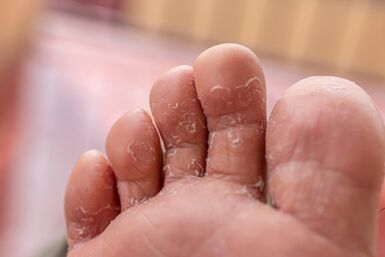
What a skin lesion looks like: description and photo
The fungus starts from the nail bed: its plate loses its transparency.The condition of the skin changes as a result of external factors and certain pathological processes in the body.The skin between the toes is the thinnest and most sensitive.The fungus destroys proteins in the dermis.It eats it, processes it, and produces toxic products in return.
Scientists have found that men are more susceptible to fungal infections: they sweat more.Among women, this problem is more common among athletes, as well as among those who are too fond of pedicures, especially without proper handling of the instruments.
You can see what a fungal infection looks like in the following picture:
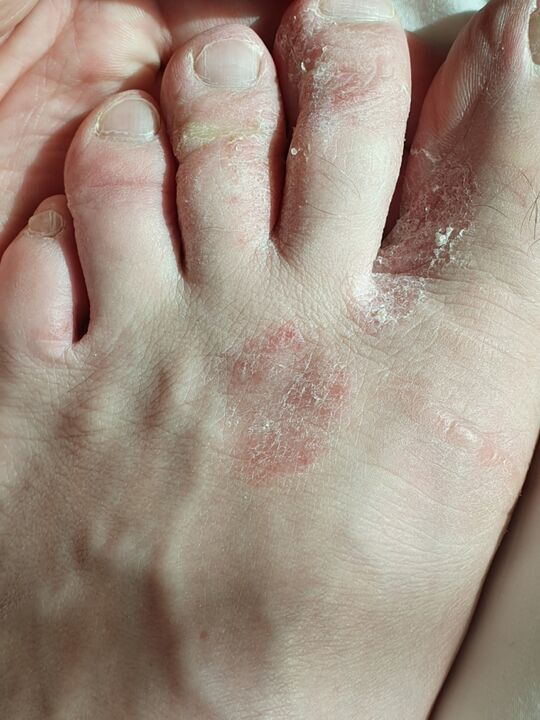
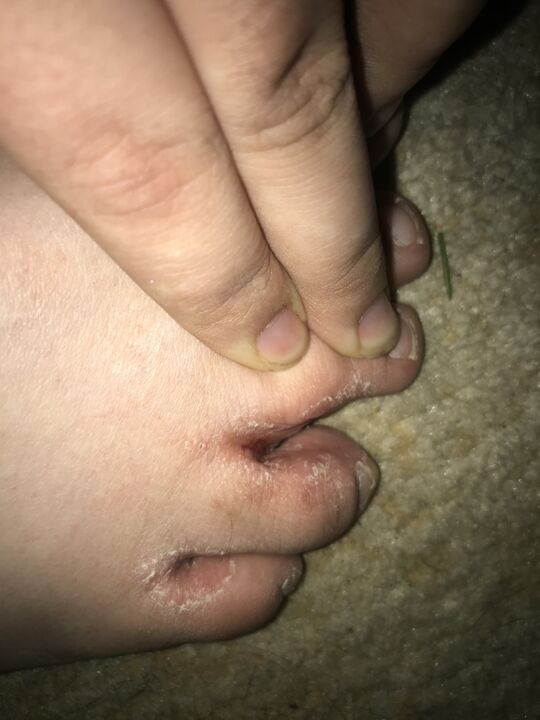
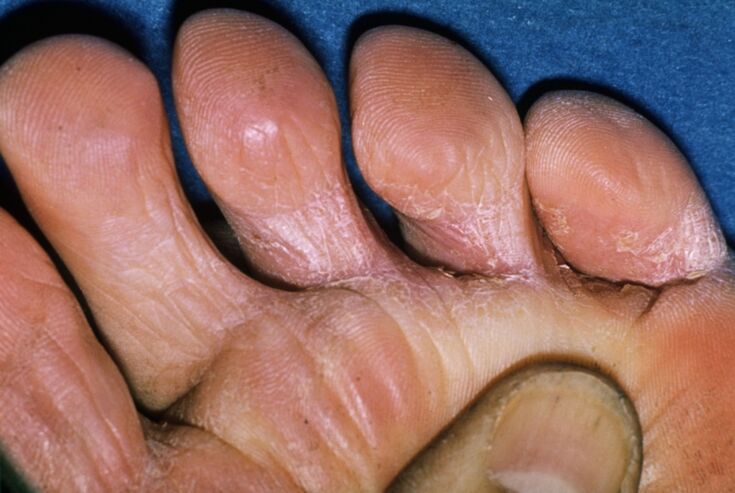
Forms of the disease
Attention!The acute form occurs when the immune system is suppressed by the infection.
A person feels itchy skin between the fingers, and there the epidermis peels off.Sweat and wet procedures increase the discomfort.A characteristic odor may appear.In the acute form, a crust forms between the fingers;body temperature rises.
There are several types of the chronic form of the fungus:
- When the form is deletedslight peeling is observed.
- For psoriasis- the affected area is covered with small scales, itches after getting wet.
- Diaper shaped shapeDiagnosing reddened and swollen skin between the fingers that immediately turns into cracks.
- Dyshidrotic- pink-red skin is visible under many blisters.
Different types of fungal infections
Fungal infections are caused by three types of bacteria:
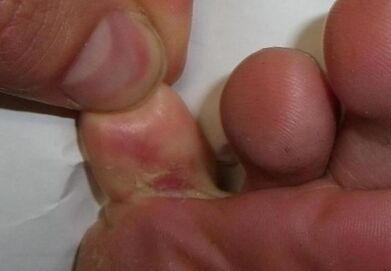
- Yeasts affect nails and skin.
- Mold needs heat and high humidity to grow.
- Dermatophytes are the causative agents of mycosis: they account for 90% of infection cases.
Treatment of fungi on the skin between the toes is complicated not only because of the diversity of microorganisms.Pathogens acquire resistance to their environment.And microbial toxins suppress the immune system: the skin becomes very inflamed.
Risks of infection
Help.Fungal infections can also be transmitted to healthy people from sick people and pets.
We know from a school biology course that microbes constantly attack the skin, but not all people get sick.Athlete's foot is more common in people who are at risk, take a lot of antibiotics, or do not maintain good personal hygiene.
The risk of fungal infections increases with the following diseases:
- elevated blood sugar;
- overweight;
- metabolic disorder;
- increased sweating;
- thyroid problems;
- hormonal imbalances.
In addition, the following factors cannot be taken into account during the examination of the patient:
- age (baby's skin is especially sensitive);
- systematic stress;
- pregnancy;
- frequent contact with water;
- unbalanced diet.
It is very easy to catch a fungal infection, especially if personal hygiene rules are not followed.Interdigital fungus is spread through:
- shoes;
- carpets;
- towels;
- dishcloths;
- manicure tools.
How to recognize the disease?
The interdigital fungus has several stages of development:
- First, small cracks appear between the toes and on the feet.
- At the site of the cracks, the skin begins to peel off.
- Then the disease is actively manifested.Red spots and even blisters with transparent fluid appear on the skin.
- Corns start to form and the skin becomes rougher.Calluses form.
- Peeling is accompanied by itching and sometimes a burning sensation.
- Cracks turn into erosion.
Important!In the initial stage, the symptoms are mild, so many people cannot follow them and start a fungal infection.
Only timely treatment under the supervision of a specialist makes it possible to treat the disease.If the patient was in contact with other people before consulting a doctor, preventive treatment of all household members is necessary to avoid infection.
Treatment: what ointments, creams and other means should be used?
Interdigital fungus takes a long time to heal.Internal drug treatment should be supported by external drugs (creams or ointments).Effective antiseptics and antimicrobials for the treatment of the disease:
- tincture of iodine;
- salicylic alcohol;
- boric acid;
- fucorcin;
- sulfur ointment.

In difficult and advanced situations, additional tablets should be taken.Medication is prescribed only after a comprehensive examination.
You should not self-medicate, especially if there is no accurate diagnosis.This can only make the situation worse.Without treatment, the entire leg becomes inflamed, and the pain is felt not only when walking, but also at rest.Fungus increases the risk of bacterial infections and allergies.
What folk remedies can be used to treat it?
Attention!Drug therapy can be supported by folk remedies.
- Therapeutic baths.Add 2 teaspoons of baking soda or salt to a liter of warm water and soak your feet in it for 30 minutes.Carefully process the steamed skin, remove the dead particles.You can also use dried celandine or chamomile for the procedure.For 1 liter of liquid, you will need 3 tablespoons of the mixture.You should steam your feet in the medicinal infusion for at least 20 minutes.After the procedure, treat the infected skin with hydrogen peroxide or iodine.
- Lotions.Soak a piece of cotton wool in hydrogen peroxide and apply it to the damaged areas.Wrap your feet in film, wait 5 minutes, then rinse with warm water.Lotions can also be made from strong tea leaves.
- Homemade ointment.Take one tablespoon each of vinegar, glycerin and olive oil.Mix all the components thoroughly.Rub the resulting mixture on the affected areas, cover them with a film and put on socks.In the morning, apply laundry soap to your feet and rinse thoroughly.
- The most accessible folk treatment of the fungus is carried out using iodine.We soak a cotton pad in it and carefully go over the problem areas.
Table vinegar helps with itchy skin and unpleasant foot odor.The acid changes the skin's alkaline balance, which stops the fungus from growing.
Prevention
It's easy to get a yeast infection, but it takes a long time to heal.Preventive measures will help to avoid re-infection:
- Wash your feet with warm water every day, then apply cream.
- You may not wear shoes or go barefoot in public places (sauna, bath).
- We make sure that calluses do not form on our feet.
- We buy comfortable and high-quality shoes.It should not press, rub or cause discomfort.When buying a new pair, we only try to put on socks.The inside of the shoe is regularly treated with a formaldehyde solution, and the socks are washed at a temperature below forty degrees.We often wear sandals in the summer.
- We lead an active lifestyle and strengthen our immune system.
- After wet procedures, it is important to dry the skin with a soft towel, paying special attention to the distance between the fingers.
- Special sprays, lotions and powders reduce sweating.
Reference!Ointments or creams help well with the dry form of the fungus.Before applying the product, take a warm bath.
No one is safe from mycosis.It can be caught even if all hygiene rules are followed.In this situation, the most important thing is not to hesitate and see a doctor immediately.The specialist develops a treatment algorithm.